Monday, January 23, 2017

Final Project - Women's March on Washington

For my final project, I attended the Women's March on Washington in St. Paul. I had never been to an event like this, so I had no idea what to expect, but I couldn’t pass up this opportunity. I hadn’t even heard of this event until a few days prior, but when I learned about the group's values and goals, I knew it would be something that I would want to experience. I asked a friend of mine to go with me, and we were very excited to help show support.


IMG_0379.PNG IMG_0359.JPG


We knew we were in the right place before we were even within a few miles of the area. There was traffic packed all the way down through the freeway, and we ended up getting out of the car at a stoplight, because we didn’t think we’d be able to get any closer. We got out of the car and just started following the crowd. To be honest, I have no idea where the march actually started, because the closest we could get to the start was the St. Paul Cathedral. There were people as far as I could see in front of me and it wasn’t long before I couldn’t see the end of the people behind me either.

IMG_0380.PNG  IMG_0358.JPG
The march started at at 11:00, but the people around me didn’t start moving until about 11:45. If I had to guess, I’d say we were pretty close to the middle of the group of marchers, but we still took a long time to begin the march at that spot. While we waited to move, there was still a lot going on around us.  People were chanting while we waited and playing music to get the crowd pumped up. We were all huddled together in the middle of the street for blocks and talking to one another. I saw many people start talking and connecting to people that they had never met before. There were a lot of signs and clothes that people had made themselves and that was a big conversation starter. Of all the people I encountered (there were a lot), I never once noticed anyone be anything but nice and friendly. It was such a positive, accepting, and powerful environment. The only bad thing that I heard of was that one counter-protester got arrested for spraying “chemical irritants” into the crowd. At one point an ambulance had to drive through the crowd while we were waiting and I assume it was related to that incident.


IMG_0334.JPG  IMG_0375.JPG


At  around 11:45, when we finally began moving, the crowd's energy-level peaked. I believe that we only walked less than a mile, but there were many uninformed people helping  direct us to where we needed to go. There was a lot of chanting going on the whole time and here are some of the ones I remember:
  • “Love. Not Hate. Will make America great.”
  • “Show me what democracy looks like. This is what democracy looks like.”
  • “Who are we? The majority. What do we want? Equality.”
  • “Love trumps hate.”


IMG_0342.JPG
Initial view of the MN Capitol from the march


Once we got to the capitol, we had to make our way to the front so that we could see. It took us at least 10-15 minutes to find a place where we could see, but once we had gone through the wall of people, it was easier. There was more space when we got closer to the capitol, and we listened to the speakers from a pretty good spot. The speakers were very interesting, and one of the most memorable being Rep. Ilhan Oman. Everyone who spoke was very passionate and about particular issues that mattered to them. Despite what some people think, most people never even mentioned Trump by name, it was more about coming together on the issues that we are passionate about.


IMG_0366.JPG
View of crowd from the top of the MN Capitol


St Paul police estimate between 90,000 and 100,000 people showed up to march. That is 5 times more than they projected, which was impressive in itself. I think that more people showed up than expected, because they realized how big of a deal it was. For example, my family planned on just dropping me and my friend off, but all of them ended up joining us because they realized it was something that they couldn’t miss.


There is perceived to have been at least 3.7 million marchers worldwide, in at least 500 cities. The estimate is that 1 in every 100 Americans marched on Saturday. Several groups have been attempting to put together a spreadsheet to accurately state the total populations. Out of all of those people, there hasn’t been one report of violence in any of the cities by marchers.


It was very cool to feel like I was part of something important. So many people showed up and that’s not something that you can ignore. It was a very big statement that we are still here and expect our new president to acknowledge our values. It was such a positive atmosphere filled with passionate, loving people. In fact, the main themes that I saw in the crowd and signs were love, hope, and acceptance. There were people from all walks of lives, races, genders, and ages, and it was great to see everyone come together. It was one of my favorite experiences and I am very happy that I chose to attend.

Sources:

*All pictures of the march were taken by the me
http://www.fox9.com/news/230598563-story
https://docs.google.com/spreadsheets/d/1xa0iLqYKz8x9Yc_rfhtmSOJQ2EGgeUVjvV4A8LsIaxY/htmlview?sle=true#gid=0

Mental Health in Teens

Mental health problems are very common among people today, but they are surprisingly prevalent in teens as well. 20% of youth ages 13-18 live with a mental health condition. That is 1 in every 5 teens. Some of the most common disorders include ADHD, depression, and anxiety disorders. The stresses of adolescence and high school can force youth into these disorders, and some can last all their lives. 50% of lifetime mental disorder cases begin by age 14. The earlier that these conditions are diagnosed and treated, the better off the patients are.

Diagnosing and treating mental health problems is a very important part in the process of recovering/coping. 75-80% of children and youth with a mental disorder, who need treatment, have not received it. Many kids feel that they are weak or broken if they admit to struggling with mental illness. This is probably a result of bullying or stigma that surrounds people with mental health issues. 49% of youth who are struggling with Depression, never even tell an adult.


Keeping mental disorders from being treated may have a variety of negative effects. Suicide is the 3rd cause of death in youth ages 10-24. Also, 90% of people who die by suicide have an underlying mental illness. Depression is the leading cause of disability worldwide. This holds people back from living to their full potential. In fact, 70% of youth juveniles, and 26% of homeless people have a mental illness.

The main way that I believe that we can improve the prevalence of mental health among teens, is to reduce the stigma around the subject. Adolescents are already feeling the need to find themselves and belong, and mental health can just be seen as another hurdle to jump. It is often feared that people won’t accept or support you if you tell them you have a mental health condition. I hope that one day, that doesn’t have to be a fear.

Sources:

Thursday, January 19, 2017

Effects of the AIDS Epidemic on Gay Rights

The AIDS epidemic was a time of widespread panic and suffering throughout the U.S. The virus is known to have affected more than 50,000 people in the first six years that it was discovered, and has now affected over 1.2 million people in the U.S. This epidemic had a variety of negative impacts on the gay community, but it seems to have also played a role in helping the gay rights initiative get to where it is today.


Before the AIDS epidemic broke out, there was already a gay rights movement underway. The Stonewall Riots had taken place just over 10 years before the AIDS virus took effect. However, the events and treatment that many homosexual people experience during the epidemic motivated them to take a stand.


As people began to notice the start of an epidemic, it was recognized that there were a large amount of gay men being diagnosed with this disease. It was then that people switched their thinking to the idea that this was a “gay disease”. It was often referred to as “gay cancer”, “gay pneumonia”, or “the gay plague”. Although only 63% of AIDS victims are gay men, they soon became the stereotype for the AIDS epidemic. Gay men were often fired from their jobs or evicted from their homes, even if they didn’t have the virus, just because of this stereotype.

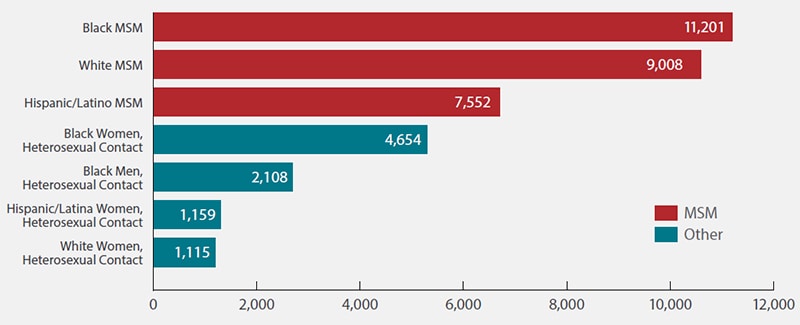
 Bar chart shows the estimated new HIV diagnoses in the United States in 2014 for the most-affected subpopulations. Black men who have sex with men = 11,201. White men who have sex with men = 9,008. Hispanic/Latino men who have sex with men = 7,552. Black heterosexual women = 4,654. Black heterosexual men = 2,108. Hispanic/Latina heterosexual women = 1,159. White heterosexual women = 1,115.

At this point, the gay rights movement became less about social treatment, and more about politics. Activists believed that the process of treating and curing the AIDS virus took far longer than necessary, strictly because people were not concerned about this so-called “gay problem”. It was only natural for gay rights movements to increase after the AIDS epidemic, because many people had to deal with inequality and homophobia everyday while battling this disease or helping someone who was. It was not uncommon for people to be denied sick days or rights to see their partners, because they were not technically “family”.


These people, who were fed up with the treatment of the gay community, soon began to connect with each other and form groups. One of the most famous groups from the AIDS epidemic was ACT UP. This was an advocacy group to help people with AIDS and to spread the word about the way it was being handled. Their motto was “Silence = Death” and they wanted to tell their stories to inspire change. This helped bring light to how many gay people there were in the world. It could be people that you would never expect. Many famous people were outed because of contracting the AIDS virus and people realized that they admired them just the same. People soon began to see the humanity of the gay community and that nobody deserves to suffer the way many people were. They gained publicity and people were hearing them. It wasn’t just a gay issue anymore. It was a human issue and people were dying from it.

Image result for act up


If you had told people in 1981 that by now Gay Marriage is widely accepted, human rights protections are in place for gays and lesbians, and events like World Pride are tourist draws, I don’t think that they would believe it. It took a lot for the U.S. to get here, and there is still plenty way to go, but it is a very big achievement. Although the AIDS epidemic was an awful time, and still continues to affect people, it seems to have had a large impact on bringing gay rights to where they are today.


Monday, December 12, 2016

Gender Roles

Pink and Blue. Dolls and Trucks. Dresses and Suits. All of these things are characteristics that are often used to define a gender. However, the issue of gender roles is much bigger than assuming girls have long hair or that boys like sports. These small stereotypes are symbolic of the large-scale pressures placed on each of the genders to act in a certain way.

Women are often seen as the “damsel in distress”, in constant need of a man's support. They are taught to be submissive and not to speak out against others. While a man is seen as “assertive”, a woman is seen as “bossy”, in the same situation. Women claim leadership opportunities far less often than men because they don’t wish to be seen in that light. It can even affect their choice in professions, because they are expected to be in certain fields. It is also difficult to join a career in which people like you are very underrepresented. People like to see themselves in the career that they choose because it feels good to be around people that are similar to yourself. Although some women may want to be stay-at-home-moms or nurses, expanding the societally accepted options for women is very important.

While women are seen as fragile, men are seen as the strong counterparts who must always remain tough. Men are looked down upon for showing emotion, as they must always remain strong for women. They are often criticized for breaking from the norm of outdoor-loving kids and athletes. Although they debatably get criticized more than girls, they are not allowed to express their feelings and usually have to bottle it up inside. Many experts think that this is why male to female suicide rates are close to 3:1 at this point.

Constantly attempting to change yourself in order to obtain approval from others can have very bad effects on people. This video shows how gender roles can make people feel like they don’t belong and how defying these roles can cause feelings of exclusion. Kids can be made to feel like their feelings are not legitimate and that faking is their only option to receive acceptance.

Each of these individual factors are not very important in themselves, but they show a rather twisted big-picture. They help to create a society in which people don’t feel comfortable being themselves, based on their gender. Most of the stereotypes we hold do not have a real reason for existing, and are just all we have ever known. It is up to us to show that looks, roles, and interests are not affected by our gender.

Thursday, May 28, 2015

Why do celebrities matter?

Some people love celebrities a lot more than others, but we all know them.  People like to watch celebrities lives, and that could be for a number of reasons. You might love Justin Bieber, you might hate him, or you might just think he's weird, but I bet you know who he is.

There is nothing special about celebrities other than the pedestal they are on. They have many people looking at them, which makes it easy for you to get a constant look into their lives. You always know when they are in a relationship, where they are traveling, and a lot of times what they are eating. You get very connected with this person, but somehow you are still very disconnected.

No matter how close you feel like you are to this person, chances are you wont be able to ever make friends with them. Maybe one day you could meet them for a couple second though, if your lucky. It can make people crazy. People want to meet these people who are on this pedestal for them to see, but they are too high up to ever meet. So the only option left is to obsess over them.

One reason people love celebrities so much is because they are very idealized in society. We tend to only see the good sides of people, whether that be in a photo, interview, or magizine. People think that they completely know celebrities, and that they are an image of perfection.

Another reason is attraction. Need I say more?

One good reason to love celebrity is because they inspire you. Celebrities have had success in their lives to get themselves to the point they are at. They can make people feel like anyone can achieve success, which is a good thing.

Why do we choose to idolize people that are the hardest to become part of our lives?
What makes us love certain celebrities more than others?

Thursday, May 14, 2015

10 days of news

I am always generally aware of current event going on in the world, but I never go to seek out this knowledge. I get most of my news from websites like twitter, even though I wouldn't say that’s a very reliable source, It may have a lot of rumors and may not be completely true, the baseline of the news is usually correct. There a never stories that trend that are totally false. Twitter is a good source to look at because it tells a story in the phrase or hashtag that is trending, and then if you’re interested you can look it up online to see a real news source.


Other than social media, I get news from the Today Show at school. I currently have American Experience, so we watch current event in the mornings. This is a good source to watch because it has full stories that are very reliable. They are also video’s which is good because sometimes America is lazy.


I looked at a very different source than I usually do for my ‘10 days of news’. I looked at the site Aljazeera, which I enjoyed in a weird way. It didn’t give me much major news, like I didn’t know a single question on the news quiz from my source. I don’t think that’s quite what the sites supposed to be about though. There is a lot of news that is just as important but doesn’t get covered by any other news sources. The cover small town news things, and things that are really affecting small places. There is also a lot of news about different countries that is a very big deal but we just don’t talk about much. It was a different side of news that I liked.


We, as citizens and as people, are very vulnerable. We look to major news sources to tell us things because we have no way of understanding situations without them. We are like small children looking to their parents for answers. That makes it the parent’s job to decide what to tell and how to tell it. They have a responsibility to only tell us what we should know, and sometimes keep us oblivious to things that may hurt us. We have no control over that, unless we want to listen to someone else.


There are bad things on the news all the time, and often times we are better off not knowing them. They can make you sad or even angry, but isn’t that what news is all about? Making you feel something? You are supposed to feel something.


When the Boston Bombing happened it was all over the news. People were upset even though it had would have had no effect on them without the news. It did not directly affect me or anyone in my life, but I still felt sad and felt bad about it. That way the people who were directly affected by it, weren’t feeling bad alone. I think that is the true purpose of news. To share something. Whether that be happiness, sadness, knowledge, laughter or grief.  


Sunday, May 10, 2015

Deadly Force

If you have ever watched the news, then you have probably seen numerous reports of cases of deadly force.  People protect themselves, others, or their property by fatally harming another. There are different situations where this is seen as okay in the eyes of the law. There are different rules in different states on this, but the question all of them have to ask is 'when is killing someone else alright?'.

The line between reasonable force and excessive force is very thin which can cause problems with the law. In MN the law is as follows: "The intentional taking of the life of another is not authorized by section 609.06, except when necessary in resisting or preventing an offense which the actor reasonably believes exposes the actor or another to great bodily harm or death, or preventing the commission of a felony in the actor's place of abode."

There are several pieces of information that are not obvious in this statute. You can not use deadly force anywhere outside of your abode unless you are 'innocent'. This means that you can't provoke someone, shoot them, any claim self defense. You are not innocent in you were part of the problem. Also, if you are robbing a bank and someone pulls a gun on you, you can't shoot them and claim self-defense. When you committed the crime of bank robbery, you forfeited your right to self-defense.

The phrase 'great bodily harm' is also very important in the statute. The injury has to have a high probability of death or causes serious permanent damage. If these conditions do not apply to your situation you can face jail time or large fines.

Some states have laws that state that people have to trying to run away before they can use deadly force. This is not a law in Minnesota currently, but it is some places.

AP_DEADLY_FORCE.gif (371×304)

If you see someone in your home, you can't use a firearm on them even if you see they have one. They have to be pointing it directly at you or someone else. This seems like a bad law to me because once someone has a gun pointed at you, chances are that he will shoot you before you can shoot him. So many things can go wrong, but I suppose things can go wrong no matter how the law is.

Thursday, April 9, 2015

Kindergarteners are cool

6 year old Rylee is a kindergartener. Her and her family have recently gone to Florida and she told me all about it. Just a warning, 6 year olds tend to jump around a lot in their stories.

"I had an ear infection the day before we left so we had to get the drops before we left. The next day I felt way better though. We had to get ready and we had to do lots of things so then we got in the car and drove to the airport. When we left somebody brought the car over to my dads’ work and stuff. Then we got to the airport and we checked our bag and we got on the plane and we got our Ipad’s out. I had my Ipad. My apple Ipad. I was listening to music on it.

When we got off grandma and grandpa picked us up and we drove home to the lake. They had a work party so yeah. So we took a golf cart ride and then the next day we went to the pool because it was really nice. The next day they had to work though, and they work at the same job so later yeah.

Then we went to the beach and I got seashells and we jumped over waves that came. I got to pick which seashells we brought home and stuff like that. We played golf with grandma and grandpa though but it wasn’t normal golf. It was pickle golf but I guess there aren’t actual pickles though. I like pickles.

The thing I most remember is we went on this roller coaster and we went upside down most of the way and most of the time all of it was screaming and I won this big giant duck and I won this little tiny fish for Quinny (Her 2 year old sisters’ name is Quinn). And my big giant duck, it’s head was bigger than it’s body. I got the goodest one and guess what a little kid was doing? She was throwing a fit because she wanted the big one. So then they had to leave. That’s what happened. You get what you get and you don’t throw a fit. Seriously, she was like *imitation of a child wailing*. She was even stomping her feet. She was like this: *stomping* 'I want a big one'. I was actually kind of funny but I was trying not to laugh.

We got to see sting rays too. We saw them but they didn’t have the stinger on them. We had some shrimp and we put our hand down and guess what? One of them splashed my mom and my dad and Quinn was soaking wet. From feet to like hair were soaking and she didn’t like that very good.

We also went to this turtle thing where we had like 3D glasses and there was this big giant crab that was like *demonstration of imitating crab noises and claw pinching* and then this bird flyed down and almost grabbed us. I wasn’t scared.

We went to this dolphin show and we went to a shamu show. Do you even know what shamu is? *me saying ‘no’ because she is more intelligent than I*. Your older than me and you don’t even know what it is? Okay, so it’s a whale, and it’s called shamu. Really. I was sitting in the splash area. I was soaking wet. It was fun! *sudden realization* No it wasn’t. It wasn’t fun being soaking wet the entire way home.

And one time I saw a wasp.

When I got home Ali (her best friend) was like ‘I miss you. I miss you.’ and she squeezed me so hard I almost choked to death. She missed me so much.

My voice hurts"

Thursday, April 2, 2015

Design

Design plays a more important role in our lives than most people ever realize. Everything has design to it even if it is poor design. There are different arrangments of things that make up design. When you change the location of the applesauce in your fridge, you are changing the design.

Good design should have a number of things. It should be appealing to your eyes to make you want to look at it. The color combinations and fonts can help to make people want to look at it more. Once you have someones attention with the appearance you need to make people actually want to read what you wrote. A good design should pull readers in on different areas on the page. you have to understand your readers and know what people will want to look at and what they will be to lazy to read. People like pictures, info graphics, and  big numbers so good design will play to that.


Design can make choices for people before they even know it. So many choices are made strictly on the design of things. You want to read, own, or experience something that is appealing to your eyes.

One example of this is buy things like cars. Your car needs to have good mileage, a good engine, nice tires (you can tell how much I know about cars), but above all else it has to look good. For a lot of people, including me, there isn't much to the decision. I don't know what features are good for a car to have and what aren't. If I was buying a car I would have my dad tell me which ones are best according to all the car stuff, and then pick the one that looks the coolest. That's just what would happen.

I went to a store while I was on vacation and come across bacon band aids. They were just like normal band aids, except they had pictures of bacon strips on the front. Right next to them were normal band aids priced at $1.98 or something. These do the exact same thing but the bacon ones were like 6 bucks. That is more that a 300% increase for bacon pictures. That is completely ridiculous but to be quite honest I contemplated buying them. For awhile.

In a lot of case, design is more important than cost, effectiveness, or anything else. It helps make decisions everyday even if you don't know it.

Displaying photo.PNG

Sunday, March 15, 2015

Religion in Public Schools

Religion is a very controversial topic that many people have different views on. Most people have a strong opinion either for or against it. Whichever opinion they have, it’s a good chance they passionate about it. Because of this most schools are against teachers, and sometimes students, expressing their opinions on such a controversial subject.

The Title VII of the Civil Rights Act of 1964 states that employers must allow their workers to fulfill their reasonable religious practices, as long as it doesn't interfere with the job. This can really conflict with the U.S. Constitution's Establishment Clause. That clause keeps public schools from allowing teachers from advocating a particular belief in front of students.

The conflicting elements of these can make it difficult to enforce rules regarding religion because of the balance that needs to take place.


It can be hard to figure out what is acceptable and what isn't. Schools are allowed to talk about the history of religion, in fact in most schools it's a standard. Nearly every school agrees that books like the Bible and the Torah have had a huge impact on the world. However, showing devotion or a singular truth of a sacred document is not permitted.

It is hard to know not to cross the line because sometimes it isn't always clear where the line is. A lot of times people need to make their best guesses on what is acceptable and what isn't.

There has been a recent case in North Carolina recently that has helped to have a new law passed specifying what is accepted in public schools. A 6 year old girl in an elementary school was told to remove the word "God" from a poem for Veterans Day. She wrote "He prayed to God for peace, he prayed to God for strength". She wrote this referring to her grandfather, a Vietnam veteran.

This new law helps to clarify just what can be done by public schools and what can't. There will always be blurred lines in this situation but at least this provides some structure.

Sunday, March 8, 2015

Choice

Choice is a huge part of our lives. We make many little decisions every day, even if they aren’t big ones. We don’t know a life without any choice, but we don’t know one with free will either.

Choice is very necessary but too much can lead to bad results. You need to have some sort of structure or rules. You can't grow up without rules or nobody can help you make decisions in your life at times where you aren’t yet capable to make them yourself. A persons decision making skills don't develop fully until age 25. Because of this, we need people to help us make decisions until a point in our lives.

Even though we know that people can’t have full choice, people can’t have no choice either. Without choice, people would fight for it like in every dystopian novel ever. People need to make their own choices, even if it will be the wrong one. We need to make the wrong choices to learn from them. Bad choices help us see the good choices more clear.

Free will is completely impossible. Nobody will ever make a decision all by themselves. There will always be consequences and restrictions that influence your choices. You will never have a blank slate, to make any decision you want.

There is also no way to make a decision on your own because your brain makes the decision before you even know it. There’s a difference between making a decision and your brain making a decision.

What we do now is make decisions based on the very small spectrum of options we actually have to choose from. A lot of times you have to choose the lesser of two evils. We sometimes don't even know these are evils but because they are both choices we are glad to have them.

I don't know if it would be better if we had more freedom. If we could make more decisions by ourselves would we be happier or overwhelmed by the responsibility?

Friday, March 6, 2015

The Future of Journalism

I think that journalism is going to continue on forever, but will change over time. I don't think that journalism can end because of my definition of journalism. I believe that journalism is communication between two or more people. With that definition, communication would have to end for journalism to end.  That is impossible.

Even though journalism won't end, it can still change and evolve. This is obviously already happening. The difference between journalism in my generation and 50 years ago is huge. So much more of journalism is online than ever before. Soon nearly everything will be.

Coming up with the idea for newapp was very difficult for one main reason. This is an invention for the future, but we don't know what will be most appealing to people, even 6 months from now. We didn't know much about what the future, but we did guess a few things. We assumed that we would evolve over time and be able to do more things. However, we seemed to go off of the assumption that people would still have the same interests and like the same things.

People are lazy. A successful source of news will understand this and adapt to this. They will have short and to the point news. We tried to make this happen by having people submit their own things. They would only write what they would want to read.

Another reason we have submissions by the public is because we think that a main part of journalism is communication and communication isn't a one way street. That was one of the most important parts of our project and what we decided to focus on.

Monday, February 16, 2015

Celebrities and Feminism

2014 was one of the biggest years for cultural figures fighting for feminism. Some of these figures were John Legend, Lena Dunham, Ellen Page, Beyonce, Patrick Stewart, Ashton Kutcher and Dustin Hoffman. These people, along with many others, have been using their platform to help with furthering the idea of feminism.

Emma Watson has been one of the most important people in this sudden rise of feminism. The British actress was appointed UN Women Goodwill Ambassador in July of 2014. On September 20 of the same year, she gave her game-changing
speech at the United Nations. In this speech she started the #Heforshe campaign and corrected one of the biggest misconceptions about feminism. "I have realized that fighting for women's rights has too often become synonymous with man-hating. If there is one thing I know for certain, it is that this has to stop" says Watson during her speech.

Feminism is the advocacy for women's rights on the grounds of the political, social, and economic equality to men. Many people believe that feminism is about proving that women are above men and the current roles should be switched. This is what the #Heforshe campaign is trying to fix. The purpose of this campaign is to let people know what feminism really means. The equality of both genders. Watson asked men and boys to help spread the word and show their support by saying "How can we effect change in the world when only half of it is invited or feel welcome to participate in the conversation?"


Many men agreed and signed the pledge, in fact to this day there 217,561 signatures by men on that website. 60,906 of these men live in the United States. Twitter also blew up with pictures of men holding #Heforshe signs and tweets from supporters of the new campaign. Among these men were celebrities such as Harry Styles, Logan Lerman, Tom Hiddleston, Joseph Gordon-Levitt, Chris Colfer, Matthew Lewis, and Jared Leto.

One of these men, Joseph Gordon-Levitt, not only participated in the #Heforshe movement, but also talked about feminism on his own. While on
The Ellen Show, he talks about him being a feminist and what that means to him. After this, he noticed all the mixed feelings people had been showing online about him classifying himself as a feminist. He made a video of himself at his home, talking about these things and misconceptions people have with feminism. "It's complicated and I grant that it's complicated and I think that it's a really great thing for us all to be talking about" he says in this video.

The fact is that so many people, both celebrities and normal people, have started talking about feminism in the last year. People are learning about the problems that both men and women face and that feminism is about helping. Feminism is seen as something for solving women's issues, but in reality it deals with men's issues too. Emma Watson shows an example of this in her explanation of being a feminist. "When at 14 my girlfriends started dropping out of their sports teams because they didn't want to appear 'muscly'. When at 18 my male friends were unable to express their feelings. I decided I was a feminist and this seemed uncomplicated to me." Men and women's issues have the same idea.

Jackson Katz is the creator and co-founder of the Mentors in Violence Prevention(MVP) and gave a
speech for TEDxFiDiWomen. In his speech he talks about the importance for both men and women to realize that equality is important and we all have to come together for it. "And so one of the things that I say to men, and my colleagues and I always say this, is we need more men who have the courage and the strength to start standing up and saying some of this stuff, and standing with women and not against them and pretending that somehow this is a battle between the sexes and other kinds of nonsense. We live in the world together." Says Katz

It is amazing that women fought so hard to get the right to vote in 1920 and the fight for equality is still going today. We wish that we wouldn't have to keep fighting for equality but it is great how far we have come. We never would have thought it would get this far, even though that's sad to say.

Tuesday, February 10, 2015

What is Journalism?

If you are a part of my generation, I bet you can't remember the last time you read a newspaper. However, the last time on social media was probably a matter of hours ago. This would seem absurd to the next generation, but is really just our reality. This makes the number of news sources skyrocket. There are papers, television, online sources, and social media sites such as facebook, twitter, instagram and tumblr. Many of these are targeted at completely different audiences.

Television has always been not only a source of entertainment, but also news. This has been a new version of news for a while, but recently we have realized there is someething much higher up on the scale and that is the internet. The only time I will ever turn on the news is because is because I saw something important trending on twitter. After seeing that, I will go onto the news because they are a much more reliable source to give me the information. Social media gives me immediate updates on current event, where as the news gives me reliable information if I choose to find out more.

This being said, I think that journalism does not just have to be news. I believe that almost everything is journalism. My definition of journalism would be as follows: communication where another person retains something of substance.

There are only a few things that I do not consider journalism. Firstly, I think that there has to be an audience of some sort. That could just be you talking to your mom, or writing for the Star Tribune. If you are writing in your diary that you will burn before anyone ever reads, that wouldn't count. As long as someone else will hear, see, or understand what you are communicating, it is journalism.

I also believe that this communtication has to be something of substance. Almost everything is "of substance" so that isn't a very hard regulation to follow. As long as it isn't a random combination of letters, it means something. Even words that aren't technically words are of substance because they

have meaning to some people. For instance the term "asdfghjkl" may mean absolutely nothing to some people, but to some internet folk, it is totally understandable. However, 20 years ago nobody would think of that as something of substance. This just goes to show that the definition of journalism can change as society does.

One person talking to another person, I think, is journalism. It doesn't really matter if it important or news. You don't have to read the largest audiences or write for the best people to be a journalist. Every can be, and is, a journalist .


Thursday, January 22, 2015

Truth and Journalism

When we first started talking about truth in Quest English 8 I was very confused and I have to admit, I don't understand it any more now. That's the thing though, I don't really think there is a definition for truth. It is something we will never know everything about. To know the truth, you would have to know every view and perspective, and you will never know everything.

I think there is a difference between "truth" as a noun, and "true" as an adjective. Something can be true without being the truth. One part may be true, but it can't be the truth unless you have all the information.

This is even harder as a journalist because people expect the truth. You have to work to get as close to the truth as possible, even if you will never get the whole story. One mistake can ruin the little truth that you have. You can not be firsthand at everything, so you have to rely on others which makes things even more complicated. Humans are not machines, and don't always tell you true information.

Some people really enjoy giving false information or putting it on the internet. That makes it a lot harder to get reliable information. You have to think a lot more about what sources you are getting information from. A lot of people don't know this and believe that everything they read is true which then spreads like wildfire. Then all of the sudden you have something like Macaulay Culkin dying for like the 4th time.

Quotes and reliable sources are good ways to avoid false information but still need to be checked. Writing reliable stories would be much easier if you knew that everything was true, but it's not. It just is another important layer to journalism.